The Woman You’re Dressing For Isn’t Watching Anymore
- Zari Roberts
- Jan 12
- 4 min read
Updated: Jun 12
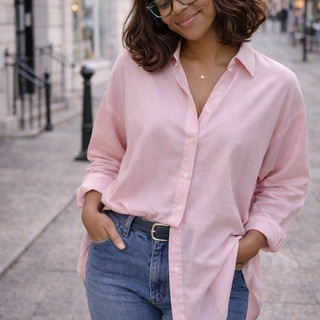
Women standing infant of garage, wearing black pants and leather jacket looking away from the camera Women posing in striped button up, denim jeans
The Inherited Eye
We don’t start dressing for ourselves.We learn early who is allowed to be seen, admired, praised. Style becomes a quiet negotiation between what feels natural and what feels acceptable.
This is the first gaze: teachers, peers, partners, timelines, mirrors shaped by other people’s expectations.
At sixteen, I learned what was considered attractive and more importantly, what was sought after.
That was the moment my understanding of beauty shifted.Not because I questioned it, but because I absorbed it. Beauty, where I grew up in California, looked a certain way. It was boho chic. Girl-next-door effortlessness. Crop tops worn like confidence. Vans everywhere casual, but intentional.
Makeup was overused, not for creativity, but for correctness.You were expected to look put together at all times. Not styled, assembled.
There was an unspoken rule: you either were attractive, or you weren’t. And once that line was drawn, you learned quickly where you stood. So we dressed accordingly. Not to express ourselves, but to belong. Not to feel at home in our bodies, but to avoid standing out in the wrong way.
That was my first encounter with the inherited eye, the gaze that teaches you how to look at yourself before you ever learn how to see yourself.
That is how approval slowly became the reason you got dressed.
Trends had to be approved by someone first.They were followed, not questioned. They became guidelines. Standards, oddly rigid for something meant to be expressive.
And once you begin dressing within those rules, representation becomes difficult.How do you show who you are when you’re busy chasing permission? How do you recognize yourself when the goal is to be received well, not felt deeply? Style stops being a language and starts becoming a performance.
The Performance Years
When approval becomes the reason you get dressed.
There was a time when every outfit felt like a presentation.Not because you were shallow but because visibility felt like safety. Clothes were armor.Beauty was a strategy.Perfection felt like protection.
It’s interesting how that shift happens.
At some point, you stop trying to be someone you never were. Not in a dramatic way just subtly.You start paying attention to what you like. What feels natural.What doesn’t require effort to maintain.
And without trying to be seen, people begin to react. Not because you’re performing better but because you’re present. Because you’re walking in your essence. Because your style is no longer asking for approval it’s moving from your own internal standard. That’s the quiet truth no one tells you:authentic expression is magnetic, not because it’s loud, but because it’s aligned. And suddenly, you’re standing in front of your closet without an audience unsure of who you’re dressing for now that no one is watching.
This is not a loss. This is an invitation.
Style without witnesses
Private Beauty
There is a kind of beauty that only exists in private.The outfit you wear when no one will see it.The fabric you choose because it calms your body.The silhouette that feels like relief. This is where style stops performing and starts belonging. When you arrive here, a quiet shift begins.Suddenly, much of your closet feels unfamiliar. Not because it’s wrong but because you’ve changed. You begin to see yourself differently. You start dressing for your own body, your own rhythms, your own season. You reach for what feels good instead of what looks correct. What fits who you are now, not who you used to present as. This is not confusion. It’s clarity arriving softly. Style and identity.
The Withdrawal

When you stop dressing for approval, there’s a strange discomfort.
You might feel:
Underwhelmed by your closet
Unsure what you even like anymore
Tempted to disappear into basics, or hide again
This isn’t failure. It’s detox.
Have you ever woken up, walked into your closet, and tried to find an outfit, only to feel like nothing is right?
You can put something on. It might even be cute. But it feels underwhelming. Disappointing. Not because it’s wrong but because it’s not what you imagined. That gap is important. It’s the space between who you were dressing as, and who you’re becoming. Your closet hasn’t failed you. It’s simply catching up to your honesty.
Relearning how to dress without permission
The Soft Return
Dressing for yourself isn’t a dramatic reinvention. It’s quieter than that.
It looks like:
Choosing comfort without apology
Letting outfits be unfinished
Wearing what supports your day, not your image
You don’t need to be admired to be aligned.
The woman you are becoming doesn’t need an audience
Dressing Forward
The most powerful shift happens when you realize: You are no longer trying to be seen.You are trying to be with yourself. Style becomes less about being noticed and more about feeling present.
A question to sit with.
Closet Confession
Who did you used to dress for and who are you dressing for now?
Style is not what you wear when you’re being watched. It’s what you choose when no one is asking.
~Z


Comments